
Technical Specification for the Safe Operation and Maintenance of Hazardous Materials (Hazmat) Transport Vehicles

Technical Specification for the Safe Operation and Maintenance of Hazardous Materials (Hazmat) Transport Vehicles

The high-temperature periods of summer and autumn represent peak seasons for hazardous materials (hazmat) transport vehicle failures. Improper operation or maintenance oversights can easily trigger severe accidents, such as cargo leakage. This technical specification establishes standardized operational procedures and mitigation requirements to minimize operational risks.

Technical Specification for the Safe Operation and Maintenance of Hazardous Materials (Hazmat) Transport Vehicles

Technical Specification for the Safe Operation and Maintenance of Hazardous Materials (Hazmat) Transport Vehicles

1. Pre-Trip Safety Inspections

• Placarding and Marking Verification: Ensure that all vehicle and trailer reflective markings, UN number placards, and hazard class labels are intact and clearly visible. The bulk container/tank markings must strictly match the specific Proper Shipping Name (PSN) of the cargo loaded.
• Vehicle Operational Readiness: Verify the integrity and functionality of the braking system, lighting/signaling, and tires. Vehicles with any mechanical or electrical deficiencies are strictly prohibited from entering public roadways.
• Containment and Seal Inspection: Regularly monitor the internal pressure and temperature metrics of the tank. Conduct leak detection on flange contact surfaces, ball valves, and couplings using a soap-bubble solution to proactively identify and eliminate micro-leaks.
• Safety Relief and Discharge Controls: Confirm the operational integrity of all safety relief valves and emergency shutoff devices before departure. Ensure that emergency shear valves, internal valves, and loading/unloading ball valves are fully closed and secured.

2. Cargo Loading Controls

• Properties Awareness: Transport personnel must be thoroughly familiar with the safety data sheet (SDS) properties of the specific hazardous cargo, including flash points, toxicity levels, and thermal expansion coefficients. For substances with high thermal expansion coefficients, use sunshades or thermal blankets and continuously monitor tank pressure variables.
• Dedicated Transport Controls: Enforce a strict dedicated-tank policy. Cross-contamination or mixing of incompatible hazardous materials inside the same containment is strictly prohibited to prevent catastrophic chemical reactions.

3. En-Route Transport Management

• Thermal Risk Mitigation: During periods of extreme heat, implement a “day-rest, night-run” scheduling model to avoid peak daytime temperatures. This prevents product thermal expansion from exceeding the Maximum Allowable Working Pressure (MAWP) of the tank.
• Route Planning and Compliance: Establish and approve fixed transit routes prior to departure, intentionally avoiding unverified infrastructure or poor road conditions. Unauthorized route deviations are strictly prohibited.
• Hazard Avoidance: Prioritize routing that bypasses high-density population zones and peak traffic hours. In the event of an en-route emergency, prioritize moving the vehicle to an open area. If immobilization occurs, immediately activate hazard warning lights and deploy emergency warning devices.

4. Driving Safety Operations

• Credential Compliance: Vehicle operators and transport attendants must carry all legally required transport documents at all times, including Dangerous Goods Transport Licenses, Dangerous Goods Manifests (Shipping Papers), and route permits.
• Load Limit Enforcement: Loading must strictly adhere to the vehicle’s certified gross vehicle weight rating (GVWR) and designated cargo capacity. Overloading is strictly prohibited.
• Fatigue Management: Enforce a mandatory rest period every two hours of driving. Driving while fatigued is strictly prohibited to maintain continuous situational awareness.
• Speed and Space Management: Strictly adhere to specialized speed limits for dangerous goods transport. Maintain safe following distances according to road conditions, and proactively decelerate or detour if congestion is detected ahead.

5. Transfer and Transfer-Site Management (Loading/Unloading)

• Authorized Personnel Access: Cargo transfer operations must be performed exclusively by certified hazmat technicians. Unauthorized individuals are strictly barred from entering the exclusion zone of the transfer site.
• Site Zoning Controls: The designated transfer area shall be used strictly for loading and unloading operations. It must not be utilized as a temporary rest area. Performing non-essential vehicle maintenance or unrelated tasks within this zone is strictly prohibited.
• Adverse Weather Restrictions: Prior to performing transfer operations during thunderstorms, verify that all lightning protection, static grounding/bonding connections, and moisture-proofing safety protocols are fully active and validated.

6. Emergency Response Requirements

• Preparedness and Drills: Fleet operators must conduct regular hazmat emergency response drills and continuously update site-specific and cargo-specific Emergency Response Plans (ERPs).
• Equipment Proficiency: Transport personnel must be proficient in operating all onboard fire suppression systems and emergency equipment. In an emergency, containment and mitigation actions must strictly follow standard operating procedures (SOPs) and response plans.
• Immobilization Signage: If a mechanical breakdown compromises road traffic safety, immediately activate the vehicle’s hazard warning flashers. Deploy reflective warning triangles/devices 50 to 100 meters behind the vehicle on standard roads, and at least 150 meters behind the vehicle on expressways/highways. All personnel must immediately evacuate to the safety zone beyond the road shoulder or guardrail before calling emergency services.
• Uncontrolled Leak Response: In the event of a cargo leak that cannot be mitigated by initial onboard measures, immediately move the vehicle to an open area far from population centers and water resources. Instantly report the incident to the fleet dispatcher and local emergency management agencies, specifying the exact UN number/cargo name, chemical state, and estimated leak volume. Simultaneously initiate an exclusion zone to evacuate nearby civilians, strictly prohibiting bystanders or unauthorized personnel from entering the perimeter.
Understanding Automotive Exhaust Brake Valves: Working Principles, Operation, and Maintenance

Understanding Automotive Exhaust Brake Valves: Working Principles, Operation, and Maintenance

Understanding Automotive Exhaust Brake Valves: Working Principles, Operation, and Maintenance

Understanding Automotive Exhaust Brake Valves: Working Principles, Operation, and Maintenance

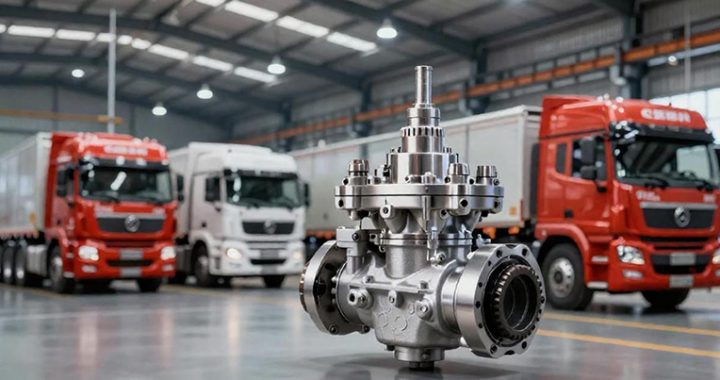
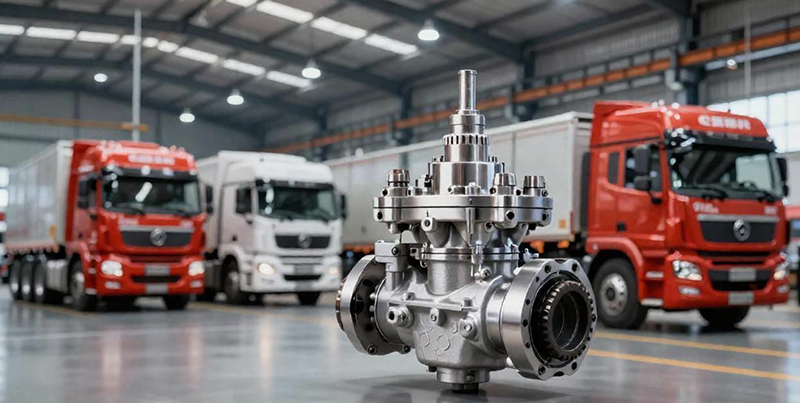
Automotive brake valves, specifically exhaust brake valves, play a critical role in heavy-duty vehicle safety by utilizing engine resistance to slow down a vehicle. This article covers how they work, how to operate them correctly, and essential maintenance steps to ensure long-term reliability.

1. How an Exhaust Brake Valve Works

An exhaust brake valve generates braking force by restricting the flow of exhaust gases. This creates high backpressure in the exhaust manifold, forcing the engine to work harder on its exhaust stroke. This rotational resistance travels back through the drivetrain to slow down the vehicle.
Types of Actuation Systems
Exhaust brake systems generally fall into two categories based on how they control the valve:
• Electronically Controlled Pneumatic System: Uses electrical signals to manage compressed air, which opens or closes the exhaust valve.
• Electronically Controlled Vacuum System: Uses electrical signals to manage a vacuum device to open or close the valve.
Core Components (Pneumatic System)
The widely used electronically controlled pneumatic exhaust brake system consists of three main parts:
• Solenoid Valve: Controls the flow of compressed air.
• Exhaust Brake Valve Body: The actual butterfly valve inside the exhaust pipe that blocks the gas.
• Operating Cylinder (Actuator): Mechanically moves the valve based on air pressure.

2. Proper Operation & Usage Guidelines

When and How to Use It
Exhaust brakes are highly effective when driving downhill or navigating long, steep slopes. Using the exhaust brake reduces the burden on your primary service brakes (wheels), preventing brake fade and reducing driver fatigue.
The Activation Process:
1. The driver flips the exhaust brake switch.
2. This connects the system to the vehicle’s battery power, activating the solenoid valve.
3. Compressed air from the air tank flows into the operating cylinder.
4. The cylinder closes the exhaust valve, creating engine braking resistance.
5. The exhaust brake indicator light illuminates on the dashboard.
Important Safety Notes
• The Dashboard Light is Only an Indicator: The light turning on only means the switch is engaged. It does not guarantee that the mechanical valve has successfully closed or that braking force is actively being applied.
• Avoid Improper Grounding: Never ground the wire connecting the exhaust brake solenoid valve to the accelerator pedal switch. Doing so will cause the exhaust brake to remain permanently engaged, which can severely damage the engine.

3. Inspection & Maintenance Procedures

Regular maintenance ensures the exhaust brake system operates smoothly and safely.
Performance Testing
To test the efficiency of the exhaust brake, find a flat, straight road. Drive the vehicle at a medium speed, completely release both the accelerator and clutch pedals, and flip the exhaust brake switch. Check if the indicator light comes on and verify if the vehicle noticeably decelerates.
Routine Mechanical Checks
• Shaft Flexibility: Regularly check if the valve’s rotating shaft turns freely. Ensure it is not binding or excessively loose.
• Carbon Buildup: Inspect the valve for excessive carbon deposits. Heavy buildup can trap the valve and prevent it from returning to its fully open position.
Adjusting Valve Clearance
To prevent the valve from sticking due to thermal expansion, maintain a precise clearance between the valve plate and the valve body.
• Standard Clearance: 0.4 to 0.6 mm.
• Adjustment Steps:
1. Loosen the locking nuts on both ends of the stop bolt and fully close the valve.
2. Turn the adjustment bolt until the gap between the valve plate and the body is exactly 0.4–0.6 mm.
3. Turn the stop bolt to adjust the valve back to a fully open position (where the valve plate is perfectly parallel to the exhaust flow).
4. Tighten and secure the locking nuts.

SHACMAN X6000: The Premium Heavy-Duty Truck Built for Long-Haul Logistics Excellence

SHACMAN X6000: The Premium Heavy-Duty Truck Built for Long-Haul Logistics Excellence

For long-distance standard-load logistics operations, every detail of a truck directly determines fleet profitability, driver comfort, and long-term operational reliability. As the flagship premium heavy-duty truck series under SHACMAN, the X6000 — widely known domestically as Delong X6000 – is purpose-built to redefine the standards of the global long-haul logistics market, integrating industry-leading power performance, exceptional fuel and gas efficiency, lightweight design, and passenger-car level comfort.

SHACMAN X6000: The Premium Heavy-Duty Truck Built for Long-Haul Logistics Excellence

SHACMAN X6000: The Premium Heavy-Duty Truck Built for Long-Haul Logistics Excellence

Unmatched Power Options for Every Operation Scenario

The SHACMAN X6000 offers an extremely flexible powertrain lineup to meet diverse market demands. For natural gas-powered models, it is equipped with the Weichai WP16NG engine, delivering a maximum output of ‌720 horsepower‌ and peak torque of 3200 N·m, setting a new benchmark for high-power gas heavy-duty trucks in the industry. For diesel variants, the flagship configuration reaches an astonishing ‌840 horsepower‌, a figure that refreshed the domestic heavy-duty truck power record when it was first launched in 2023.

All mainstream models come factory-fitted with 12-speed or 16-speed AMT automatic transmissions, eliminating the fatigue of frequent manual shifting during long journeys. Select configurations are also equipped with a hydraulic retarder, which provides stable and reliable auxiliary braking on mountain roads and long downhill sections, drastically reducing brake pad wear and significantly enhancing driving safety.

Passenger-Car Level Cabin Comfort Redefines Long-Haul Driving Experience

Breaking away from the traditional “pure utility” design of heavy-duty trucks, the SHACMAN X6000 adopts a fully passenger-oriented interior layout. Its high-roof double-sleeper flat-floor design creates a cabin interior height of 2.13 meters, allowing drivers to move freely inside without bending over. The total storage space exceeds 1000 liters, fully meeting the storage needs of long-haul crews for daily supplies, tools, and personal belongings. The lower sleeper reaches a maximum width of 1.1 meters, providing a spacious and restful sleeping environment for drivers after hours of continuous driving.

The cabin is also packed with intelligent configurations that are rarely seen in conventional heavy-duty trucks: full LCD instrument cluster, large central control touchscreen, keyless entry, and one-button start. These features make the driving experience far closer to that of a modern passenger vehicle, rather than a traditional heavy commercial vehicle. The top-tier ‌Ultra Flagship Edition‌, which held its regional launch event in Bengbu in August 2026, comes with exclusive “Far Mountain Green” paint and golden dragon decals, and is further upgraded with voice interaction system and mobile APP remote start/stop functions, bringing unprecedented convenience to daily operations.

Global Certification and Competitive Pricing for Global Market Expansion

The SHACMAN X6000 delivers outstanding cost performance across different power configurations and trim levels. In 2026, the model successfully passed the EU Whole Vehicle Type Approval (WVTA), officially obtaining the access qualification for the European market. This certification marks that the X6000 has fully met the strictest global automotive safety, emission, and performance standards, laying a solid foundation for its accelerated expansion in overseas markets.

SHACMAN Delong X6000 6×4 Natural Gas Tractor Specification

SHACMAN Delong X6000 6×4 Natural Gas Tractor Official Specification

Category Detailed Description
Product Positioning Targeted at long-haul standard-load logistics market, which redefines China’s premium heavy-duty truck with four leading core technical advantages: ultra-low gas consumption, top-tier comfort, high-level safety and intelligent configuration.
Exclusive Gas-Saving Technology Equipped with 5 exclusive gas-saving technologies to reduce the gas consumption by over 10% per 100 kilometers. Supported by SHACMAN full-vehicle power matching technology and exclusive VCU precise control technology, its gas consumption is 2kg lower than competing models under the same working condition.
Lightweight Advantage Adopts the industry-original head-tractor and trailer integrated design solution jointly developed by CIMC and SHACMAN, with world-leading lightweight optimization design scheme. The whole vehicle is more than 300kg lighter than similar models in the industry, supporting extra loading capacity to maximize user revenue.
Cab Configuration Adopts sedan-style digital cabin design with minimalist, atmospheric European styling, fitted with keyless entry and one-button start system to deliver premium riding experience.
After-sales Service System Supports the “Dragon Travel Worry-Free” integrated system, which integrates functions including latest information inquiry, remote vehicle control and driver community interaction.
Product Slogan China Leading Natural Gas Heavy-Duty Truck · SHACMAN Quality, Build Brighter Future


Whether you are operating a long-distance logistics fleet in Southeast Asia, running cross-border transport routes in Europe, or looking for a high-reliability, low fuel-consumption premium heavy-duty truck for your business, the SHACMAN X6000 is the ideal choice that combines top-tier power, maximum operational efficiency, and driver-centric comfort.